
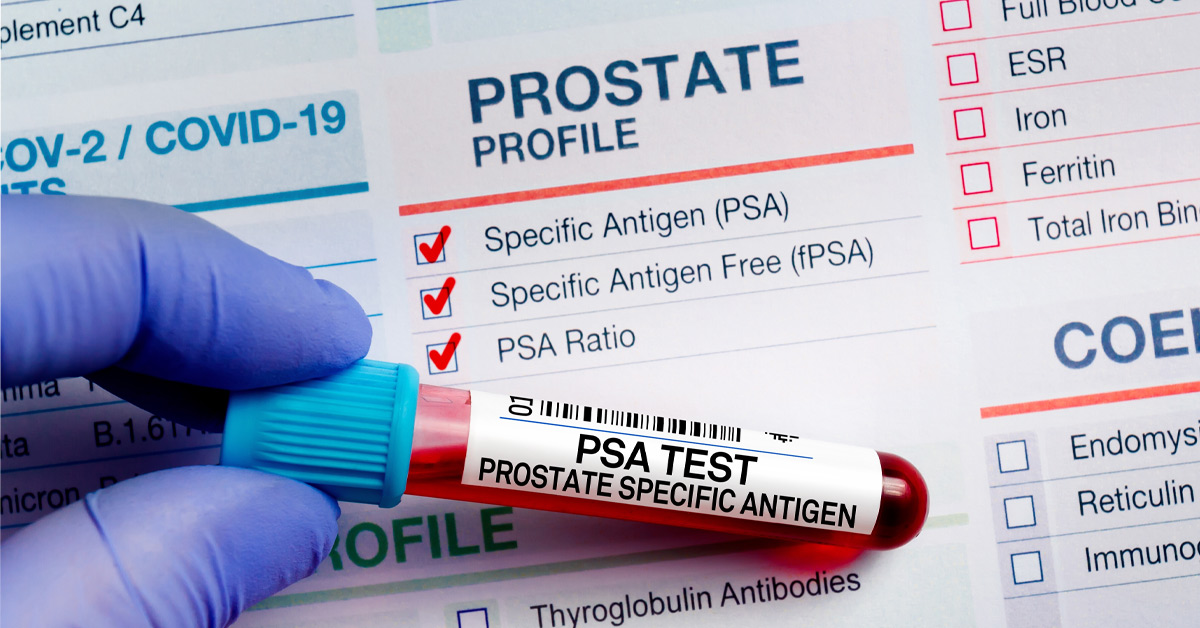
Your doctor has recommended a PSA test, and now you’re wondering what they’re looking for. Does this mean they think you have prostate cancer?
A PSA test measures a protein in your blood that can offer clues about your prostate health. Doctors often use it to screen for prostate cancer, even when you don’t have symptoms. But a high PSA level doesn’t always mean cancer.
Here’s what the test can tell you and when you might need one.
What Is a PSA Test?
A PSA test is a simple blood test that measures prostate-specific antigen (PSA). PSA is a protein made by the prostate, a small gland that helps produce semen.
It’s normal to have some PSA in your blood. But higher levels can sometimes signal a prostate problem, including prostate cancer.
A PSA test can’t diagnose cancer on its own. Your doctor considers your results, age, and medical history to decide whether you need more testing.
Can You Need a PSA Test Without Symptoms?
Yes. Doctors often recommend PSA testing for men who feel perfectly healthy. Prostate cancer usually doesn’t cause symptoms in its early stages.
When symptoms do appear, they may include:
- Needing to pee more often, especially at night
- Trouble starting or stopping your urine stream
- A weak urine stream
- Blood in your urine or semen
- Pain or burning when you pee
These symptoms can also come from an enlarged prostate, an infection, or other conditions. If you’ve noticed changes in your bathroom habits, talk to your doctor.
What Happens If Your PSA Test Is High?
Getting a high PSA result can be worrying, but it doesn’t mean you have prostate cancer.
There isn’t one PSA number that confirms cancer. Your age, health history, and changes in your PSA levels all matter.
Your urologist may recommend repeating the blood test or ordering additional tests, such as a prostate MRI. If cancer is suspected, you may need a biopsy, which involves taking small tissue samples to check for cancer cells.
Not everyone with a high PSA needs a biopsy. Your urologist will explain your results and what to do next.
What Else Can Affect PSA Levels?
Several common factors can change your PSA results, including:
- Age: PSA levels often rise as men get older.
- Enlarged prostate: A larger prostate can produce more PSA.
- Prostatitis: Inflammation of the prostate can raise PSA levels.
- Urinary tract infections: An infection can temporarily increase PSA.
- Recent ejaculation: Ejaculating shortly before testing may raise PSA.
- Medical procedures: Prostate biopsies and some urinary procedures can affect results.
- Medications: Certain drugs, including finasteride and dutasteride, can lower PSA levels.
Your doctor may ask you to avoid ejaculation for 48 hours before testing. Tell them about any medications you’re taking or recent infections.
Are There Risks to PSA Testing?
The blood test itself is quick and generally safe. The bigger concern is what happens after you get your results.
PSA testing can find prostate cancer early, when treatment may be more effective. But it can also lead to more testing when cancer isn’t present.
Some prostate cancers grow so slowly that they may never cause health problems. Finding them can lead to treatment that isn’t needed, which may cause side effects like urinary leakage or trouble getting erections.
Your doctor can help you weigh these risks against the benefits of finding cancer early.
When Should You Get a PSA Test?
Not every man needs to start PSA testing at the same age. Your risk for prostate cancer plays a big role in when you should consider screening.
The American Cancer Society recommends talking to your doctor about screening at:
- Age 50: If you’re at average risk and have a life expectancy of at least 10 years.
- Age 45: If you’re Black or have a father or brother who was diagnosed with prostate cancer before age 65.
- Age 40: If you have more than one first-degree relative (father, brother, or son) who was diagnosed at an early age.
Inherited gene changes, including BRCA1 and BRCA2, can also increase your risk. If these run in your family, talk to your doctor about when to start screening.
If you decide to get tested, your doctor will recommend how often you need a PSA test based on your results and overall health. They’ll also help you decide when it makes sense to stop screening.
Talk to Carolina Urology Partners About PSA Testing
A PSA test can offer important clues about your prostate health, but understanding the results isn’t always simple. Whether you’re due for screening or concerned about urinary changes, a urologist can help.
Carolina Urology Partners provides prostate care in Charlotte, NC, and Columbia, SC. Contact our team to schedule an appointment and find out whether a PSA test is right for you.